

Dental CAD Design Outsourcing: What Case Information Should Labs Provide?
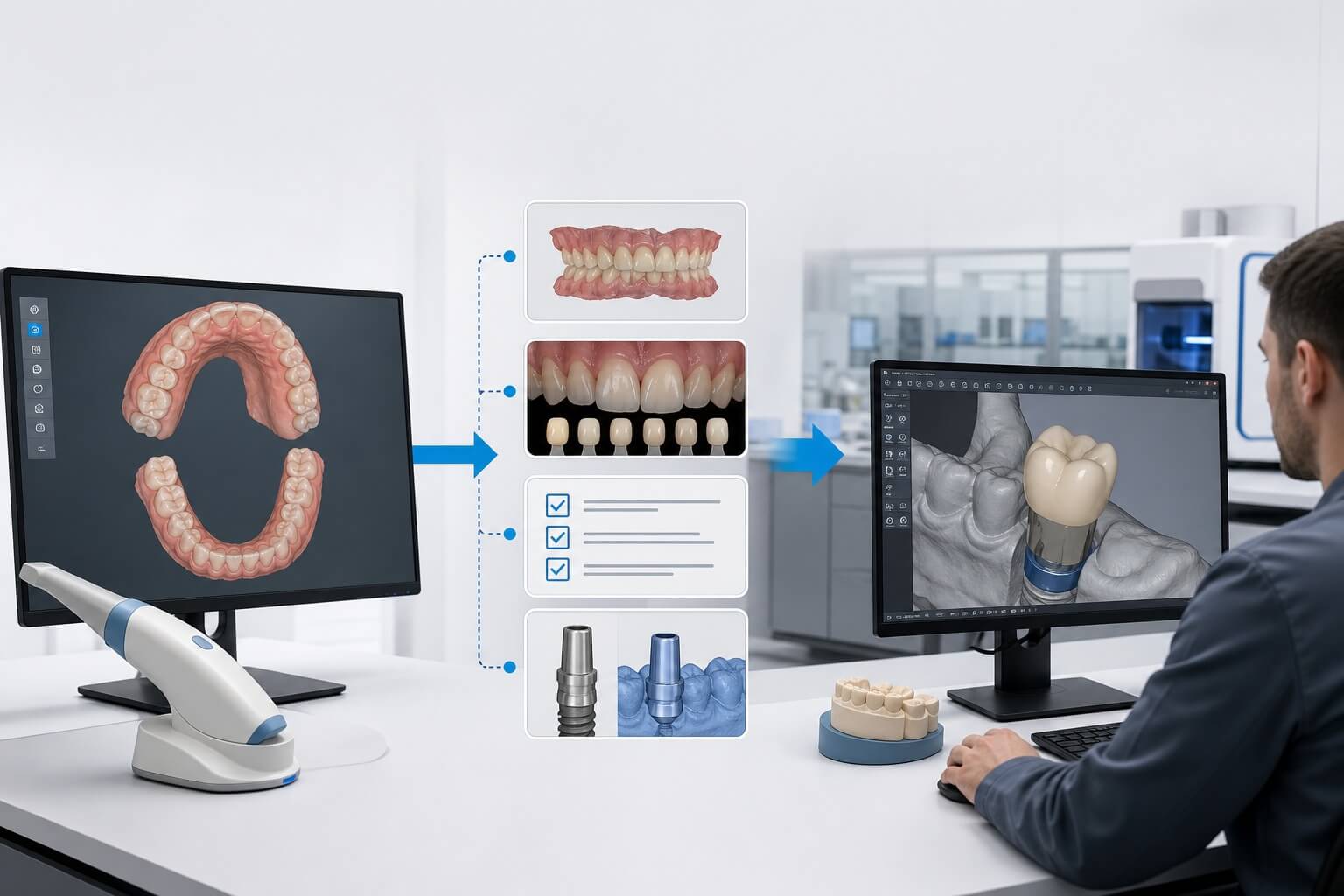
Dental CAD design outsourcing works best when the designer receives a complete, unambiguous case rather than a folder of disconnected scan files. A missing bite scan, unclear margin, unidentified implant system, or vague instruction such as “make it natural” can stop production before design begins. The delay is often caused not by CAD software, but by missing information or decisions.
At SDS, incoming CAD cases are reviewed against the submitted scans, restoration requirements, implant information where applicable, customer-specific preferences, and required delivery format. A repeatable submission process helps dental labs reduce unnecessary clarification, protect turnaround time, and maintain more consistent design standards.
What Case Files Should Be Included Before CAD Design Starts?
Start by confirming that the digital records are complete and clinically readable.
How should the upper arch, lower arch, and bite be organized?
Send the upper arch, lower arch, and bite relationship as one clearly identified case. The scans should cover the prepared area, adjacent teeth, opposing contacts, and enough stable anatomy for alignment.
For multi-unit or full-arch cases, confirm that the scan range supports the intended restoration rather than assuming a cropped segment is sufficient. Written instructions and uploaded records should also describe the same case.
What should be visible around the preparation and margin?
The preparation scan should show a continuous, readable finish line and the neighboring surfaces required for proximal-contact design. Soft-tissue overlap, moisture, reflective areas, stitching errors, or missing interproximal data may reduce confidence in the margin.
During CAD review, SDS checks relevant factors such as the margin line, internal surface, insertion direction, proximal contacts, occlusion, restoration thickness, connector areas, anatomy, undercuts, and possible interferences. If a critical area cannot be interpreted reliably, clarification may be required before design continues.
Which implant records are required?
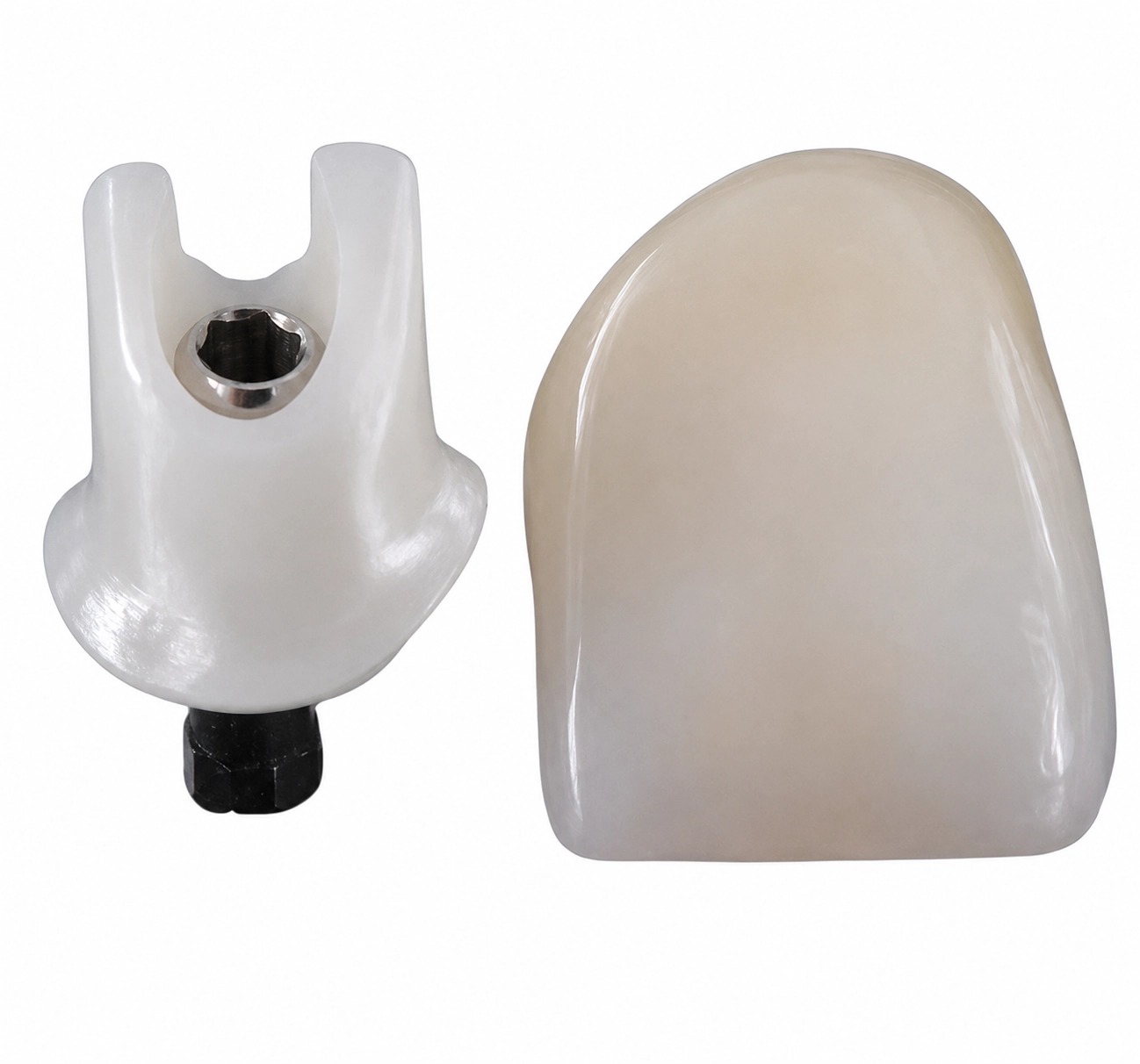
For implant crowns, bridges, custom abutments, implant bars, and full-arch restorations, provide the implant system, platform or connection, scanbody information, restoration type, retention method, and relevant material requirements.
The scanbody should be clearly captured with sufficient surrounding tissue and anatomy for orientation. A case may contain complete arch and bite scans but still have to stop if the implant system or scanbody reference is missing because component-library selection cannot be confirmed safely.
A short clarification before design is usually more efficient than correcting an assumption after the restoration has already been designed.
How Should Restoration and Material Requirements Be Written?
The prescription should translate the clinical request into usable design requirements.
Which basic details prevent avoidable assumptions?
For fixed restorations, identify the tooth number, restoration type, material, shade where applicable, and whether the request is design-only or design plus manufacturing.
For bridges, identify abutments and pontics. For implant restorations, include the relevant implant information and retention method. For removable cases, specify the arch, appliance type, tooth arrangement, base or framework requirement, and any planned try-in stage.
Which design preferences should be measurable?
Broad requests such as “make it natural” are difficult to reproduce consistently. Where possible, specify preferences for:
- proximal contacts;
- occlusal contacts;
- margin settings;
- cement space;
- emergence contour;
- anatomy and surface detail;
- connector design;
- other customer-specific parameters.
SDS can work according to different customer standards. If a dental lab already has an approved parameter sheet or reference case, providing it gives the designer a clearer working standard and helps reduce variation between cases.
What delivery format should be agreed in advance?
State the required output before design begins. Depending on the workflow, this may include manufacturing-ready STL files, supported native files, screenshots, or files for review and approval.
SDS works with 3Shape and Exocad and can process compatible digital case files associated with systems such as iTero, Sirona, Dental Wings, and Carestream.
If a lab has specific naming conventions, software-version requirements, or local CAM rules, these should be documented before regular production begins.
Which Clinical and Esthetic Records Reduce Back-and-Forth?
Scans provide geometry, but they cannot communicate every esthetic or patient-specific requirement.
When are photographs and shade information useful?
For anterior, veneer, gingival, and other esthetically sensitive cases, provide photographs when available together with the shade prescription and intended material.
Useful references may include frontal smile, retracted frontal, lateral, and close-up views that show neighboring teeth, texture, shade characteristics, smile line, and dental midline.
How should occlusion and patient-specific constraints be communicated?
Provide a usable bite record and identify relevant limitations such as restricted restorative space, heavy occlusion, crossbite, opposing implant restorations, or an existing prosthesis that must be matched.
Full-denture and full-arch cases may require additional confirmation of jaw relation, midline, smile line, vertical dimension, tooth setup, and approval or try-in expectations.
How Can Dental Labs Prevent Delays, Revisions, and Remakes?
A controlled handoff should identify incomplete information before it causes revisions downstream.
What should a preflight review check before upload?
Before submission, confirm:
- case identity and file completeness;
- scan integrity;
- tooth number and restoration type;
- material and shade where applicable;
- implant and scanbody information;
- customer-specific design preferences;
- due date;
- required delivery format.
A short preflight check is usually faster than correcting a preventable misunderstanding after design has started.
How should missing or conflicting information be handled?
Issues affecting fit, function, component selection, material feasibility, or interpretation of the prescription should be clarified before proceeding.
The question should identify the specific decision required—for example, confirming an implant connection, identifying a scanbody, selecting a margin in an unclear area, or confirming whether a customer’s standard contact settings should be followed.
Specific questions are more efficient than a general message saying the case cannot proceed.
Why do revision records and design approval matter?
Design revisions should remain traceable. Where approval is required, clear statuses such as pending review, changes requested, approved, and released for production help prevent the wrong file from moving forward.
SDS can provide the design for customer review before manufacturing. If a case later requires modification, the original instructions, customer feedback, design record, and production information can be reviewed to identify the cause.
If the result does not meet confirmed requirements because of SDS design interpretation, parameter settings, or production issues, SDS reviews the relevant records and can arrange a design modification or remake. Changes resulting from incomplete scan data, missing information, or new customer requirements are confirmed separately.
What Does SDS Review During CAD Quality Control?
Quality control should be based on defined checkpoints rather than a general judgment that a restoration “looks good.”
For CAD design, SDS reviews relevant factors including:
- margin accuracy and continuity;
- internal surface and insertion direction;
- proximal and occlusal contacts;
- thickness and connector areas;
- anatomy;
- undercuts and interferences;
- digital file integrity.
Implant, full-arch, and other complex cases may require additional review depending on the restoration and customer workflow.
For cases that continue into manufacturing, QC shifts to the physical restoration and may include seating, marginal fit and integrity, contacts, occlusion, shade, surface quality, chipping, cracks, excessive trimming, polishing, and finishing.
How Should a Lab Evaluate a Dental CAD Outsourcing Workflow?
Before increasing volume, test whether the provider’s workflow is consistent and compatible with the lab’s production process.
Start with representative cases rather than only the simplest crown. A trial can include a routine fixed case, a case using customer-specific contact or occlusal preferences, and a more complex case within the supplier’s confirmed scope.
Evaluate communication speed, clarification quality, consistency with instructions, revision handling, turnaround, and whether the delivered files are ready for the lab’s next production step.
Design-only or design and manufacturing?
Design-only outsourcing suits labs that want extra CAD capacity while keeping CAM, milling, printing, finishing, and final physical QC in-house.
The workflow is typically:
Case submission → CAD design → review/approval → digital file delivery → local production
Design-and-manufacturing support continues beyond the approved design into material confirmation, milling or printing, sintering or other processing, finishing, physical QC, and shipment.
The appropriate model depends on the lab’s equipment, staffing, internal capacity, material control, and preferred level of production control.
How Does SDS Support Dental Labs With CAD Design and Production?
SDS is a China-based digital dental design and production support team with more than 10 years of digital dental experience. The team works with 3Shape and Exocad and supports fixed restorations, implant restorations, custom abutments, full-arch and All-on-X cases, removable restorations, digital models, and dental appliances.
Dental labs can outsource CAD design only or combine design with manufacturing. For complete, clearly specified routine CAD cases, same-day design with a target turnaround of approximately 12 hours may be available; complex cases are confirmed separately.
Customers can submit scans and case instructions through the online system and use it for communication, payment, progress tracking, review, and digital file delivery.
The goal is not simply to move a case through CAD software quickly. It is to make sure the designer has enough information to understand the restoration, follow the laboratory’s standards, identify uncertainty before production, and deliver a design or restoration that fits the agreed workflow.
Conclusion
Reliable dental CAD design outsourcing starts with complete records and explicit decisions. Dental labs should provide verified scans, restoration and material requirements, implant information where applicable, customer-specific preferences, patient references when needed, and the required output format.
A structured review process then helps identify missing information, check critical design parameters, document approvals, and reduce avoidable revisions.
Labs considering outsourcing can start with a representative sample case to confirm file compatibility, design expectations, communication workflow, and turnaround before increasing case volume.
FAQs
What files are usually needed for outsourced dental CAD design?
Most cases require upper and lower arch scans, a bite record, tooth and restoration information, material requirements, design preferences, and the required output format. Implant cases also require implant-system and scanbody information.
Can a dental lab send files from different scanner systems?
Compatible open digital files can support cross-platform workflows, but file compatibility, scan completeness, orientation, case identity, and any required native project data should be confirmed before production.
What information is required for a custom implant abutment?
Provide the implant system and connection, platform, scanbody information, tissue and opposing scans, restoration type, retention method, material requirements, restorative-space concerns, and relevant emergence-profile preferences.
How can a lab reduce revisions in outsourced crown and bridge design?
Submit complete scans and prescriptions, document contact and occlusal preferences, provide customer-specific standards where available, clarify flagged data before design, and maintain clear revision and approval records.
Is design-only outsourcing better than design and manufacturing?
Neither model is always better. Design-only keeps CAM and finishing under the lab’s control, while design-and-manufacturing reduces handoffs. The better option depends on the laboratory’s equipment, capacity, material control, turnaround requirements, and production strategy.
Contact Us